

No Products in the Cart
FREE EXPRESS SHIPPING US ORDERS OVER $50 | COST AT CHECKOUT.
LEARN MORE FROM OUR BLOGS HERE.

FREE EXPRESS SHIPPING US ORDERS OVER $50 | COST AT CHECKOUT.
LEARN MORE FROM OUR BLOGS HERE.

THCP gummies are quickly becoming the most talked-about edible in the hemp-derived cannabinoids market. They are far stronger than anything most users have tried, and they demand a completely different approach to dosing, safety, and purchasing. This guide covers everything you need to know before your first (or next) experience with these ultra-potent edibles.
THCP is reported to be 33 times stronger than Delta 9 THC at CB1 receptors in lab tests, but there is no reliable "33x" conversion for real-world dosing. Start with 0.25–1 mg THCP max and increase slowly across separate sessions.
The best THCP gummies are fully lab tested with batch-specific COAs showing THCP milligrams per gummy, total Delta 9 THC content, and contaminant panels for residual solvents, heavy metals, and microbes.
THCP gummies can produce effects lasting 6 to 10 hours, significantly longer than standard THC gummies, with a slow onset of 30 minutes to 2 hours.
Most users should assume that THCP will trigger a positive result on a standard drug test, because most panels cannot distinguish THCP from Delta 9 THC metabolites.
THCP and hemp laws are changing throughout 2026 in the U.S. Check current federal and state rules before you buy THC P gummies online or in-store.
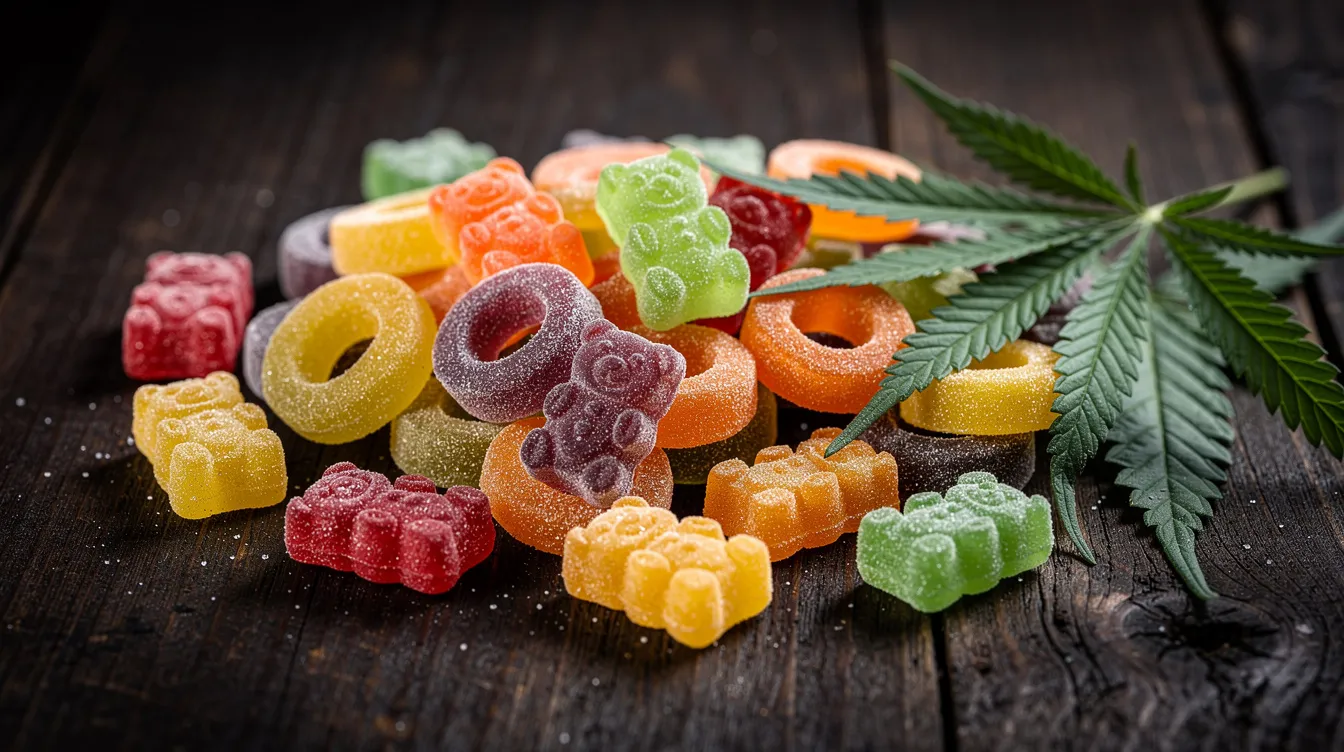
THCP, or tetrahydrocannabiphorol, is an ultra-potent, naturally occurring cannabinoid and a close relative of Delta 9 THC. THCP gummies are fruit-flavored edibles infused with precise amounts of THCP extract for easy oral dosing. They differ from regular THC gummies in a critical way: they use much smaller milligram amounts per piece but can deliver far stronger, longer-lasting psychoactive effects.
THCP is a naturally occurring cannabinoid found in cannabis, but only in trace amounts-typically 0.002–0.01% by weight. That is nowhere near enough for commercial products. So the THCP in gummies you can buy today is usually hemp derived, produced by converting hemp-derived CBD or other cannabinoids through semi-synthetic processes. THCP features a seven-carbon alkyl side chain compared to a five-carbon chain in regular THC, which is the structural key to its extreme potency.
Gummies are popular because they offer discrete use, precise labeled servings, consistent flavor, and, after ingestion, a slow onset as THCP moves through the digestive system before effects peak. But that slow onset-often 60 to 120 minutes-is also a trap. Impatient users sometimes consume a second dose before the first one peaks, leading to overconsumption of THCP, which can cause overwhelming psychoactive effects and severe side effects.
The difference between THCP and traditional THC comes down to molecular structure. THCP has a longer alkyl side chain (seven carbons) versus the five-carbon side chain in Delta 9 THC. This extra length allows THCP to fit more deeply into the CB1 receptor's binding pocket, dramatically increasing its binding affinity. Italian researchers first identified THCP in cannabis in 2019 and measured its CB1 receptor affinity at approximately 1.2 nM, compared to about 40 nM for Delta 9-meaning THCP binds to CB1 receptors with 33 times the affinity of Delta 9.
But binding affinity in a petri dish is not the same as the subjective experience in your body. Pharmacokinetics, metabolism, and bioavailability all muddy a clean potency comparison. In practical terms, 1 mg of THCP is roughly equivalent to 25–30 mg of Delta 9 THC for many people, though individual variability is significant. Some user reports suggest a typical dose of THCP can feel like 15 to 20 mg of Delta 9 THC, depending on tolerance and metabolism.
THCP compared to regular Delta 9 edibles also differs on timing and even from liquid formats like THC, HHC, and THCP syrups. THCP gummies often have a slower onset, heavier peak, and much longer tail. THCP effects can last 6 to 10 hours, longer than Delta 9's typical 4–6 hours. Users report THCP effects peaking 2 to 4 hours after ingestion, with residual grogginess possible the following morning at higher doses.
If you normally take 25 mg Delta 9 gummies, do not take 25 mg of THCP. That comparison could land you in an emergency room.
Clinical research on THCP's therapeutic effects is currently very limited. As of 2026, there are no published human clinical trials measuring THCP's potential benefits directly. Most information comes from animal data, analogies to Delta 9, and real-world user reports.
At responsible lower doses, users commonly report:
Strong euphoria and amplified mood
Deep relaxation and heavy body sedation
Altered perception of time
Intensified music, visual, and sensory experiences
Possible potential benefits inferred from THC-like activity include pain relief, stress relief, support with falling asleep, and appetite stimulation with non-intoxicating cannabinoids like THCa. But none of these uses are clinically proven for pure THCP. THCP is described as producing intense psychoactive effects similar to traditional THC but potentially more powerful, which means the same potency that may bring more noticeable benefits also increases the risk of anxiety, paranoia, and racing thoughts.
Most users who want everyday functionality stick with Delta 9 or Delta 8, while THCP gummies tend to be reserved for occasional, high-impact sessions by experienced users seeking something stronger than THC.
THCP's safety profile is not well established. Because of its extreme potency, side effects can appear at doses that would be harmless with standard Delta 9. Potential side effects of THCP include anxiety, dizziness, and increased heart rate. Other common complaints include dry mouth, red eyes, confusion, heavy body load, elevated blood pressure, paranoia, and in rare cases prolonged intoxication lasting well beyond 10 hours.
A published 2025 case report documented a 41-year-old male who consumed approximately 8 mg of THCP in gummy form. Within about an hour he developed severe psychosis-believing himself and his family were dead-accompanied by suicidal ideation and self-harm. The episode lasted roughly 48 hours. He had a history of depression but no prior psychotic episodes. This underscores why users should avoid "hero" doses, especially those with mental health vulnerabilities.
Harm-reduction guidance:
Consume in a safe, calm, familiar setting
Never mix THCP with alcohol, sedatives, or other substances like stimulants
Keep water and light snacks available
Don't drive or operate machinery for at least 8–12 hours
If you take too much: stay hydrated, focus on slow breathing, move to a quiet dim room, use CBD if available, and seek medical help if symptoms feel unmanageable.

There is no FDA-approved dosing for THCP. Standard THC dosing guidelines do not apply to THCP due to its high potency. Treat THCP as a fundamentally different substance from any Delta 9 gummy you have tried.
|
Tolerance Level |
Suggested Starting Dose |
Notes |
|---|---|---|
|
First-time THCP users |
0.3–0.5 mg |
Start with 0.3–0.5 mg THCP for beginners |
|
THC-experienced users |
0.5–1.5 mg |
First-time users should start with 0.5 to 1 mg of THCP |
|
Very high-tolerance users |
1.5–3 mg |
Still potent; equivalent to 35–75+ mg Delta 9 |
|
A typical THCP gummy contains about 2 mg of THCP per piece, so most users will need to fraction their gummy. Cut it into quarters or sixths with a small sharp knife. Store leftover pieces in a labeled, sealed container. Be aware that THCP distribution inside gummies may not be perfectly uniform, especially from lower-quality brands. |
|
|
Timing rules matter. THCP's consumption in edible forms leads to delayed onset of effects that can take 30 minutes to 2 hours to appear. Wait at least 90 minutes before redosing THCP gummies. Never stack doses in quick succession. Leave 4–7 days between strong sessions to manage tolerance. Taking THCP on an empty stomach may speed onset but also intensify effects unpredictably, so eating a light meal beforehand is usually wiser.
Potency transparency matters more with THCP than almost any other edible cannabinoid. A 1 mg miscalculation with Delta 9 is negligible. A 1 mg miscalculation with THCP can mean the difference between a pleasant evening and a 10-hour ordeal.
What to look for on a label:
Clear milligrams of THCP per gummy
Separate listing of Delta 9 THC, Delta 8, HHC, and other cannabinoids
Total cannabinoids per package and per serving
Serving size and servings per package
A proper Certificate of Analysis (COA) should include: third-party lab name, testing date, a batch number matching your product, full cannabinoid profile with THCP explicitly listed, and total mg per piece. Certificates of Analysis confirm THCP content and safety when done correctly. THCP gummies are lab tested for potency and purity by reputable brands, but forensic analyses have found that commercial THCP products may contain inaccurate amounts of THCP or additional cannabinoids due to lack of regulation.
Contaminant panels should cover residual solvents from extraction, heavy metals, pesticides, and microbial screens. Red flags include: vague "THCP blend" labels with no milligrams, COAs older than 6–12 months, missing contaminant data, or brands that only share COAs upon email request.
THCP gummies are not entry-level cannabis products. They are generally best suited for:
Experienced users of Delta 9 or Delta 8 who want stronger, longer-lasting edibles
People with very high tolerance who no longer feel standard 10–25 mg Delta 9 gummies
Connoisseurs interested in exploring minor hemp-derived cannabinoids like THC P
Groups who should avoid THCP or consult a medical professional first: individuals new to THC, those with a history of psychosis, bipolar disorder, or severe anxiety, pregnant or breastfeeding people, and anyone with serious heart conditions.
Many users treat THCP gummies as a weekend or vacation product, reserving them for evenings with no responsibilities for at least 8–12 hours. Because THCP appears to build tolerance quickly from its strong CB1 engagement, some rotate it with milder cannabinoids-CBD, Delta 8, or regular Delta 9-rather than using THCP daily.

Are THCP gummies legal? The answer depends on where you live and when you check. THCP gummies were widely marketed as federally legal under the 2018 Farm Bill, which defined hemp as cannabis containing less than 0.3% Delta 9 THC by dry weight. Since THCP is technically a different molecule, many brands sold THC P gummies through this loophole.
However, federal changes enacted in late 2025 revised the definition of hemp under Title 7, Section 1639o. Starting November 2026, total THC per package must not exceed 0.4 milligrams for hemp product compliance-a threshold that virtually all intoxicating THCP products will exceed. THCP gummies should contain less than 0.3% Delta 9 THC to be considered legal under the original Farm Bill, but the incoming rules target intoxicating analogs more broadly.
State laws vary dramatically. States like Florida and Texas have unrestricted THCP laws as of mid-2026, while states like New York and Colorado have banned THCP products. THCP legality varies significantly by state across the U.S., and it exists alongside a separate patchwork of Delta 9 THC legality by state, so always verify your state's current regulations before purchasing.
If you're outside the U.S., assume that most countries classify all THC analogs-including THCP-as controlled substances. Carrying THCP gummies across borders can result in serious legal penalties.
Many people assume "hemp derived" means "won't show up on a drug test." That assumption is wrong for psychoactive cannabinoids like THCP.
Standard workplace urine tests (5-panel or 10-panel immunoassays) look for THC-COOH metabolites. THCP is structurally similar enough to Delta 9 THC that its metabolites may trigger the same positive result. As of 2026, few commercial tests distinguish between Delta 9 and THCP, so using THCP gummies can realistically jeopardize employment or probation screenings.
Detection windows likely resemble or may exceed those of regular edibles-several days to weeks for frequent users-because THCP is highly lipophilic and stored in body fat. Only specialized laboratory techniques like advanced chromatography with mass spectrometry can distinguish between specific THC analogs, and that level of testing is rarely used in standard employment screening.
If you are subject to random or scheduled drug tests, avoid THCP gummies and other intoxicating hemp products entirely.
Not all THCP products are created equal. Quality varies widely, so choosing wisely matters for both safety and effect consistency.
Key criteria for finding the best THCP gummies:
Clear potency levels for THCP and any added Delta 9 THC per piece
Natural or vegan ingredients where possible-the best THC P gummies avoid artificial dyes and high fructose corn syrup
THCP gummies are made with clean, natural ingredients by reputable manufacturers
Flavors that mask hemp bitterness without relying on synthetic additives
Prioritize brands that post batch-specific COAs publicly, show full contaminant panels, and are transparent about hemp sourcing and manufacturing standards. Compare products by cost per milligram of THCP rather than package price alone. A $40 bag with 10 mg total THCP is very different from a $60 bag with 50 mg total.
Buy directly from reputable brand websites rather than third-party marketplaces where fakes, expired stock, or improperly stored products are more common. Check independent reviews on forums and communities instead of relying solely on on-site testimonials.
Treat THCP gummies like a special occasion product. Plan for set (your mindset) and setting (your environment) before consuming.
Practical recommendations:
Take your first dose in the evening after a light meal, with no driving or work obligations
Stay in a comfortable, familiar space with trusted people if socializing
Keep water, simple snacks, and possibly CBD or low-dose Delta 9 on hand
Avoid stacking THCP with alcohol, benzos, or prescription sedatives-compounding impairment with other substances is dangerous
THCP interacts with the body's cannabinoid receptors in the endocannabinoid system, particularly in the brain responsible for mood and perception, so expect pronounced mental effects
Consider journaling your dose, timing, and effects for the first few sessions. This helps you dial in your personal sweet spot and avoid repeating a bad experience. How much THCP works for your friend may be completely wrong for you.
Store gummies in child-resistant packaging, clearly labeled, in a cool dark place away from pets and minors. THCP gummies often look and taste like regular candy but carry far greater risk because of their extreme potency.
THCP gummies take 30 minutes to 2 hours to kick in, with most users feeling initial effects around the 60–90 minute mark. The slow onset is a defining trait-expect a gradual ramp-up rather than a sudden spike. Peak effects commonly last 4–6 hours, while the total duration stretches to 6–10 hours after consumption for many people. At higher doses, residual grogginess or an "afterglow" can persist into the following day. Always wait a full two hours before considering any additional dose.
Complete cannabis beginners should generally avoid THCP gummies and start instead with CBD or low-dose Delta 9 THC to understand how their body's cannabinoid receptors respond. Even very small doses of typical THCP can feel intense to someone without THC experience, increasing the likelihood of anxiety or panic. If someone insists on trying THCP as their first THC-like product, they should use an extremely low dose (well under 0.5 mg) under knowledgeable guidance-but this is not recommended. More research is needed to understand THCP's effects on naive users.
High-quality product lab reports (COAs) list THCP separately from Delta 9 THC and other cannabinoids, helping consumers understand exactly what they are taking. However, routine workplace or probation drug tests do not differentiate-they simply flag THC metabolites in general. Any intoxicating THC analog, including THC O and THCP, can cause a positive result. Only specialized chromatography with mass spectrometry can distinguish between specific analogs, and that is rarely used in standard employment testing. Scientific reports on THCP metabolite cross-reactivity are still emerging.
Combining THCP with non-intoxicating cannabinoids like CBD or CBN is generally considered safer than mixing it with alcohol or prescription sedatives. CBD is sometimes used after overconsumption of THC to help blunt anxiety, though responses vary. THCP's effects may interact with other cannabinoids in unpredictable ways, so understand how pure THCP feels on its own at a low dose before adding multiple compounds. Some users find that small doses of CBD alongside THCP smooth the experience and reduce edge without dulling the euphoria.
THCP appears to build tolerance rapidly because of its strong CB1 receptor engagement. Frequent daily use can quickly reduce perceived effects while pushing typical dose sizes higher-a cycle that increases risk. Most experienced users suggest limiting THCP gummies to 2–3 times per week at most and taking periodic tolerance breaks of 10–14 days. Treat THCP as an occasional, high-impact option rather than a daily staple, and rotate with milder cannabinoids like CBD, Delta 8, or standard Delta 9 when you want a more moderate experience with lower potency.
